The benefits of a head spa treatment are experiential: 60 minutes of warm water, scalp massage, steam and scent, a clean and refreshed scalp, and an hour without a phone. For the salon it is the highest-priced hour on the menu that needs no colour, cut or chemistry, and clients rebook it every 4 to 6 weeks.
You will find plenty of pages online that promise a head spa does things to your hair follicles or your nervous system. We are not going to make those claims. What we can describe is what the client feels, what the salon earns and why both keep coming back.
What does a head spa do for the client?
A head spa is a ritual, and the benefits are the things a good ritual gives you. Ask a client afterwards what they liked and the answers tend to come down to four things.
Deep relaxation, lying down
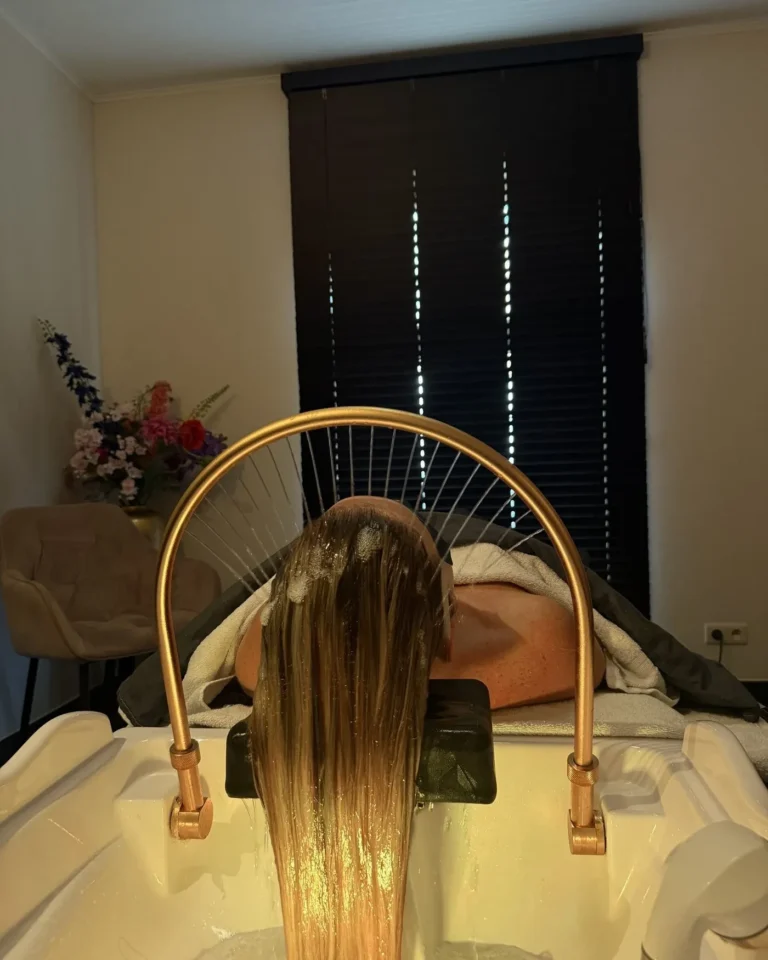
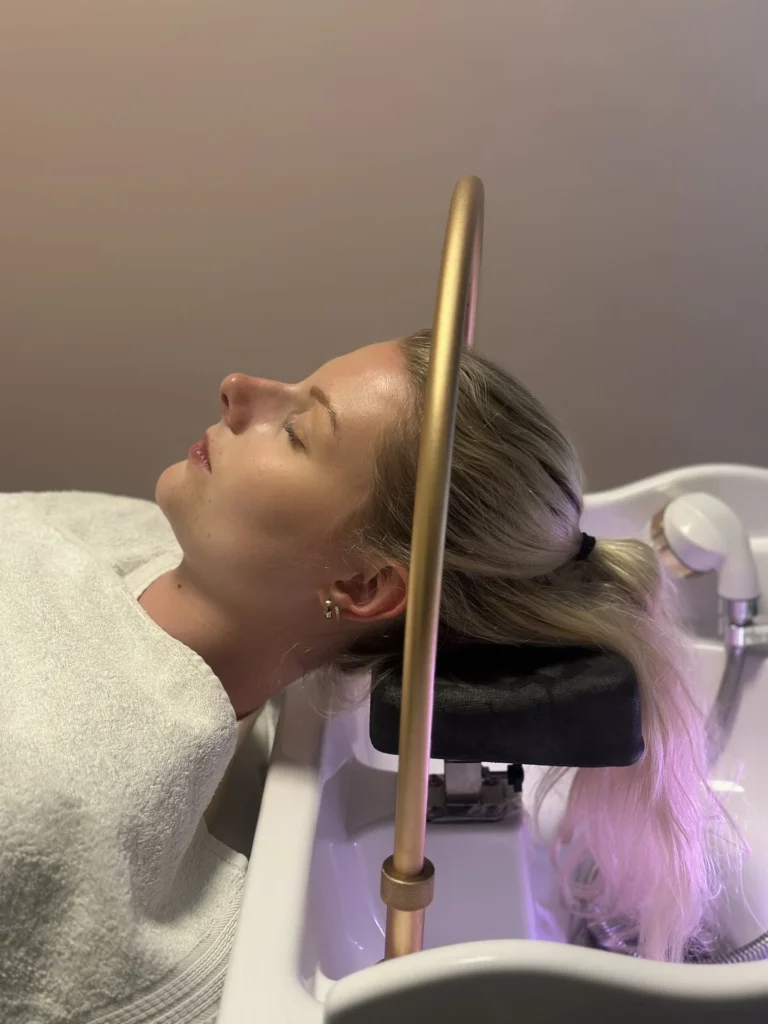
The client is fully flat, with the head supported in the basin and the neck at rest. Warm water from the arch, a slow scalp massage and a hood of warm, scented steam do the rest. It is closer to a massage than to anything else on a salon menu, and it is delivered to the one part of the body that carries tension all day and rarely gets touched.
A clean, refreshed scalp
The scalp is cleansed and massaged through the hairline, the crown and the base of the neck, then treated with a mask and rinsed through the arch. Clients leave with a scalp that feels lighter and cleaner than a home wash gives them, and hair that has been treated rather than just washed.
An hour without a phone
The head is in a basin, the hood is down and the therapist’s hands are busy. There is no way to scroll. For many clients that enforced hour of quiet is the real product, and it is rarer in their week than it sounds.
A treatment they can book by name
“A Japanese head spa” means something to clients now. They have seen it, they can describe it, and they ask for it by name. That matters: a treatment with a name travels by word of mouth, while “a scalp add-on” does not.
Why do clients come back every 4 to 6 weeks?
Because the benefit is a feeling, and feelings fade. A head spa is not a repair that is finished when the problem is fixed. It is closer to a massage or a facial: the client knows what it gave them, the effect wears off, and they book the next one.
The ritual is typically repeated every 4 to 6 weeks, which lines up with the rhythm of a colour or cut appointment. Booking the next ritual at checkout, before the client has put their coat on, is the simplest habit to build.
That rhythm is what turns a novelty into a revenue line. One client who tries it once is a nice afternoon. One client who comes back nine to thirteen times a year is a relationship.
What are the benefits for the salon?
This is the part the client never sees and the owner should look at first.
The highest-priced hour that needs no colour, cut or chemistry
A head spa hour uses warm water, a mask, a few drops of essential oil and a therapist’s hands. No colour tubes, no mixing, no toner, no processing time where the chair is occupied but nobody is working. One therapist, one station, one hour, booked ahead.
That makes it the highest-priced hour on the menu with the least behind it, and the easiest hour to schedule into the quiet parts of the week.
What the math looks like
Our ROI calculator uses $95 per ritual, 3 rituals a day, 5 days a week as an indicative example. That is 3 x 5 x 4.33 weeks, or about 65 rituals a month, which at $95 comes to roughly $6,170 of revenue per month before products and time. Your price and your volume will differ; the point is the shape of the number.
Set against the price of the equipment, the payback is measured in rituals, not years:
| Model | Type | Price excl. VAT | Rituals at $95 to cover the price | At 3 rituals a day, 5 days a week |
|---|---|---|---|---|
| Sora | Table, acrylic basin | $1,990 | 21 | About 1.5 weeks |
| Komorebi | Table, ceramic basin | $2,190 | 24 | About 1.5 weeks |
| Towa | Bed, foot bath, electric backrest | $3,190 | 34 | About 2 weeks |
| Kohaku | Chair, reclines fully flat | $4,490 | 48 | Just over 3 weeks |
| Kogane | Bed, top model | $5,790 | 61 | Just over 4 weeks |
Those are revenue figures, not profit, and they assume you fill three slots a day. Even at one ritual a day, five days a week, the Sora covers its price in revenue in about 4 weeks.
The first salon in the area
In most towns nobody offers the ritual yet. The first salon that does becomes the place people are sent to, by friends and by the salons that do not have it. The demand is already there: “head spa” is searched about 135,000 times a month in the US alone (Google Keyword Planner, September 2026, our own research).
A station that earns in more than one way
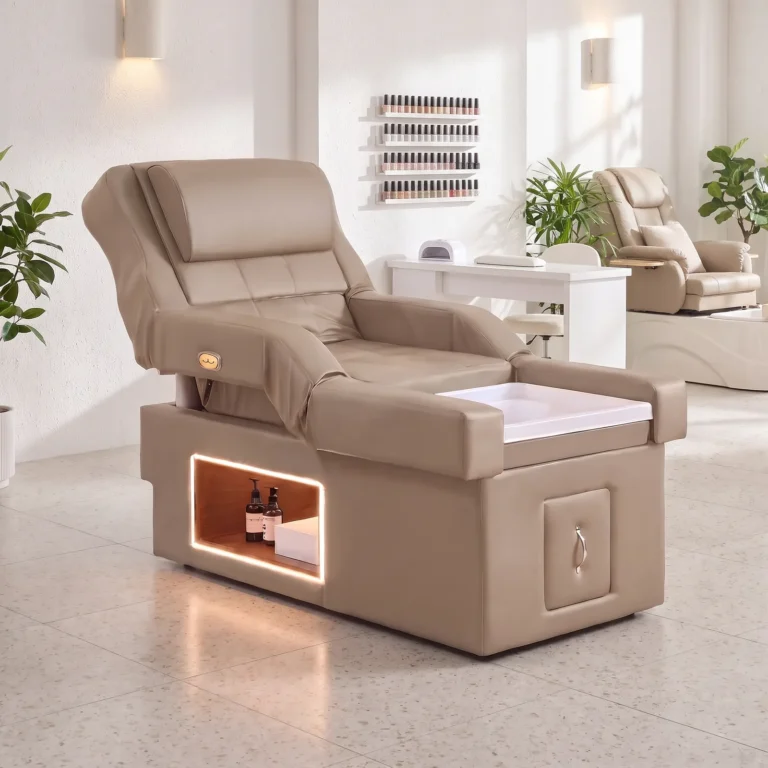
On a head spa table, a padded lid closes the basin and turns it into a flat treatment table, so the same station does massage and facials between rituals. On the beds, a hydrotherapy foot bath and an electric backrest make the hour feel like a spa visit, which supports the price. The Towa, our featured bed at $3,190 excl. VAT, is the 3-in-1 version: basin, table and foot bath.
How do you present the head spa ritual on your menu?
The treatment sells on the feeling, so the menu should describe the feeling, not the equipment. A few rules that help:
- Give it a name. “Japanese Head Spa Ritual”, or your own name for it. Not “scalp treatment”, and not an add-on line under washes.
- One duration, one price. 60 minutes. A single clear price positions it next to a massage, not next to a blow-dry.
- Describe the steps, not the features. Warm towel, water curtain, scalp massage, steam and scent, mask, rinse, neck and shoulders. Clients book what they can picture.
- Say it is lying down. This is the detail that separates it from everything else on the menu.
- Suggest the rhythm. “Best enjoyed every 4 to 6 weeks” tells the client it is a ritual, not a one-off, and makes rebooking at checkout natural.
Example menu entry: Japanese Head Spa Ritual, 60 minutes. A warm towel and a cup of tea, then lie back as warm water falls from the arch over your scalp. A slow cleanse and massage from hairline to neck, a hood of scented steam, a treatment mask, a final rinse and a neck and shoulder massage to bring you back, phone still in your bag.
What equipment do you need to deliver these benefits?
A bed or table with the basin built in, a water arch, a steam unit with hood and light therapy. All four are standard on every model in our head spa beds and tables range, and every unit works on a direct water line with no pump and no heater inside.
If you want one recommendation: the Komorebi, the ceramic flagship table at $2,190 excl. VAT, for a salon or spa, or the Towa at $3,190 excl. VAT if you want the foot bath and the electric backrest. Every unit is made to order in 42 vegan-leather finishes and delivered in 8 to 10 weeks to your door for $199 with import duties included, with a 2-year warranty on normal use.
The why a head spa page walks through the ritual step by step, and the reviews page shows what salons say after a few months of running it.
Quick answers
What are the benefits of a head spa treatment?
Deep relaxation lying down, a cleansed and massaged scalp, scented steam and an hour without a phone. For the salon it is a 60-minute treatment that needs no colour, cut or chemistry and is rebooked every 4 to 6 weeks.
Does a head spa have medical benefits?
We make no medical claims. The benefits are about how the client feels: relaxed, cared for and with a clean scalp. A client with a scalp or health concern should see a professional.
How often should a client have a head spa?
The ritual is typically repeated every 4 to 6 weeks, which fits the rhythm of a regular salon visit.
How much can a salon earn with a head spa?
Our ROI calculator uses $95 per ritual, 3 rituals a day, 5 days a week as an indicative example: roughly $6,170 of revenue a month before products and time. Your price and volume will differ.
Why do clients pay more for a head spa than for a wash?
Because they are paying for an hour of relaxation lying down, with water from an arch, massage, steam, scent and light, not for clean hair. It is booked as a treatment, like a massage.
What do I need to offer a head spa in my salon?
A head spa bed or table with an integrated basin, a water arch, a steam unit and light therapy, from $1,990 excl. VAT, plus one therapist and a plumbed water point.