To start a head spa business you need a room with hot and cold water and a drain, one station ($1,990 to $5,790 excl. VAT), 8 to 10 weeks of lead time, a plumber for the connection and a priced 60-minute ritual. At $95 a ritual, three a day, five days a week, brings in about $6,170 a month.
Step 1: Add-on service or dedicated head spa studio?
The first decision is the format, because it sets the room, the station and the marketing. Both work; the difference is how much of your week the ritual has to fill.
| Add-on in an existing salon | Dedicated head spa studio | |
|---|---|---|
| Space | One quiet room or corner with water and a drain | A whole unit with 1 to 3 stations |
| Station | One table or bed; a chair if it must fit a styling footprint | Beds with electric backrest; project quote from 3 units |
| Bookings | Regulars already on your list, offered at reception | Built from zero on search and social media |
| Risk | Low: the station pays for itself from existing clients | Higher rent and marketing, but you own the category locally |
| Best for | Hair salons, spas, beauty studios, hotels | Owners opening the first head spa in a city |
If you already run a salon, start with the add-on. Projects of 3 or more units get a project quote.
Step 2: What room and plumbing does a head spa need?
Every station we sell uses a direct water line. Check the room against this list before you order, because the station cannot change the room.
- Cold and hot water supply within reach of the station. The unit uses your own supply; there is no heater inside.
- A drain. There is no pump inside the unit, so the basin empties to a drain that has to be close.
- Mains pressure. The water arch runs on the pressure of your own pipes, which is also why there are no electronics in the water path to fail.
- Power: 110 to 240 V, with the correct plug for your country included. One ordinary socket for the LED light and the steam unit.
- The route in: the crate is roughly 210 x 80 x 100 cm on a pallet and weighs 120 to 200 kg depending on the model. Delivery is to the door, not carried inside, so measure the door and plan two people for the last metres.
- Floor space: dimensions per model are in the catalogue, together with each model’s water connections.
- Quiet: away from dryers and the reception desk.
Installation and the water connection are done by you. A plumber is recommended; a handy person can do it.
Step 3: Which head spa station should you buy?
There are three types plus a portable basin. All are made to order in 42 vegan-leather finishes (the Nagisa in 2), delivered in 8 to 10 weeks for $199 per unit with import duties included, with a 2-year warranty and a maximum client weight of 200 kg.
| Type | What it is | Models and prices excl. VAT | Buy it when |
|---|---|---|---|
| Table (2-in-1) | Wash basin plus a padded lid that makes a flat treatment table; nothing electric | Sora $1,990 (acrylic) to Aoi $2,790; Komorebi $2,190 is the ceramic flagship | You want one surface for rituals, massage and facials |
| Bed | Reclining massage bed with the basin built in; foot bath and electric functions | Rindo $2,790 to Kogane $5,790 | You want the backrest to lower and lift the client, and a foot bath during the steam |
| Chair | Salon chair with a head spa arch; electric backrest reclines fully flat | Kohaku $4,490, Ayame $5,590 | The ritual must fit a chair footprint in a hair salon |
| Portable basin | Tank-fed basin on wheels; you provide the bed or table | Nagisa $2,290 | No plumbing nearby, or you move between rooms |
Which model for which case:
- Tight budget, existing treatment room: the Sora at $1,990 excl. VAT, or the Komorebi at $2,190 if you want a ceramic basin.
- Full ritual with foot bath and electric backrest: the Rindo at $2,790 excl. VAT, our bestseller.
- Premium studio with a ceramic basin and foot bath: the Towa at $3,190 excl. VAT.
- Chair footprint in a hair salon: the Kohaku at $4,490 excl. VAT.
- Flagship station with electric height adjustment: the Kogane at $5,790 excl. VAT.
- No plumbing, or a mobile setup: the Nagisa at $2,290 excl. VAT, used with your own bed.
The full range is in the beds and tables, chairs and basins categories.
Step 4: What is the timeline from order to first client?
- Order and pay. Payment is 100% upfront before production, by card, Klarna or bank transfer. EU businesses with a valid VAT number pay 0% VAT; outside the EU no Belgian VAT applies.
- 48 hours to change your mind. Cancellation is free within 48 hours of payment, before the factory order. After that the unit is being built in your finish and there are no changes, cancellations or returns.
- Production and transport. About 7 days of production, then 28 to 35 days of transport, plus margin: count on 8 to 10 weeks in total. You receive a tracking number when it ships.
- Delivery. The carrier contacts you to schedule a date and delivers to the door on a pallet.
- Installation. Your plumber connects cold, hot and drain and tests the arch at mains pressure.
- Practice. Give the team a week to run the full 60-minute ritual on each other before the first paid booking. The ritual is described on the Why a head spa page.
For an opening date, order at least 12 weeks ahead so the plumber and the practice week are not squeezed by the last days of transport.
Step 5: How do you price the head spa ritual, and what is the ROI?
Price the ritual as the most expensive hour on your menu, because it is the only one that needs no colour, cut or chemistry. Our ROI calculator uses $95 per ritual, 3 rituals a day, 5 days a week as an indicative example. The math:
- Per day: 3 rituals x $95 = $285
- Per week: $285 x 5 days = $1,425
- Per month: $1,425 x 4.33 weeks = about $6,170 in revenue, before products and time
Set against the station: a Komorebi at $2,190 excl. VAT equals 24 rituals, about eight working days at that pace. A Rindo at $2,790 is 30 rituals, about ten days.
Set your own menu price in your own currency; $95 is the example we use, not a rule.
Step 6: What is included in the price, and what do you buy yourself?
Included with every station:
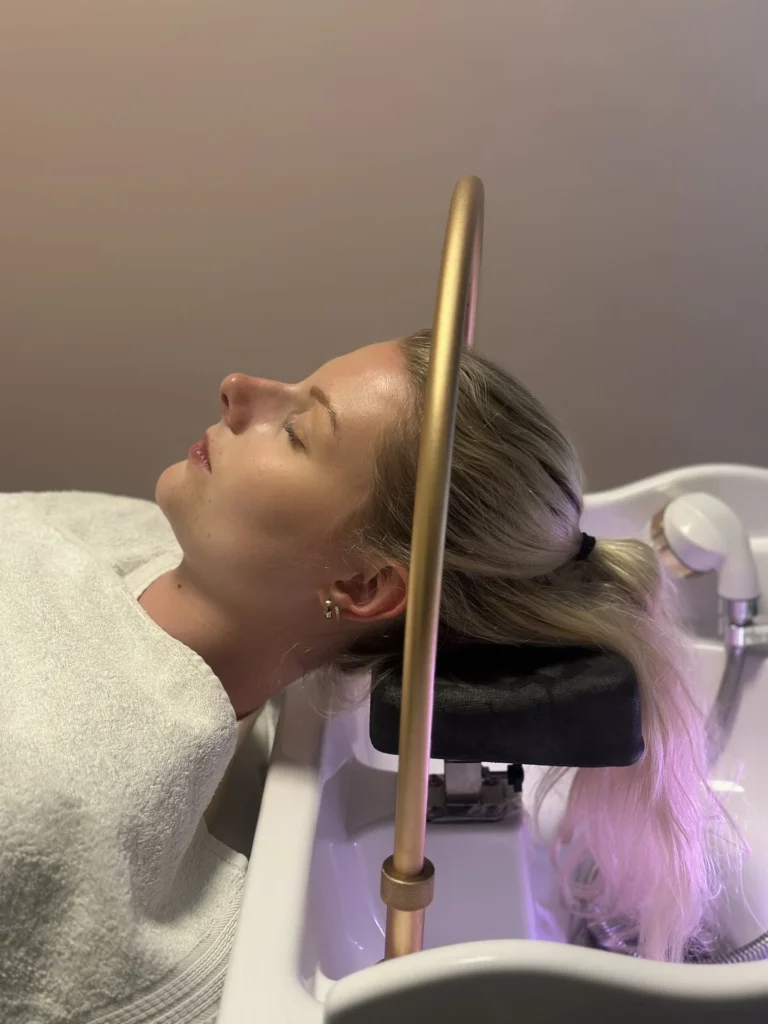
- The unit, a headrest and the water arch
- The padded lid that turns the basin into a flat treatment table (not on the Yawara, Reira, Nagisa, Kohaku and Ayame)
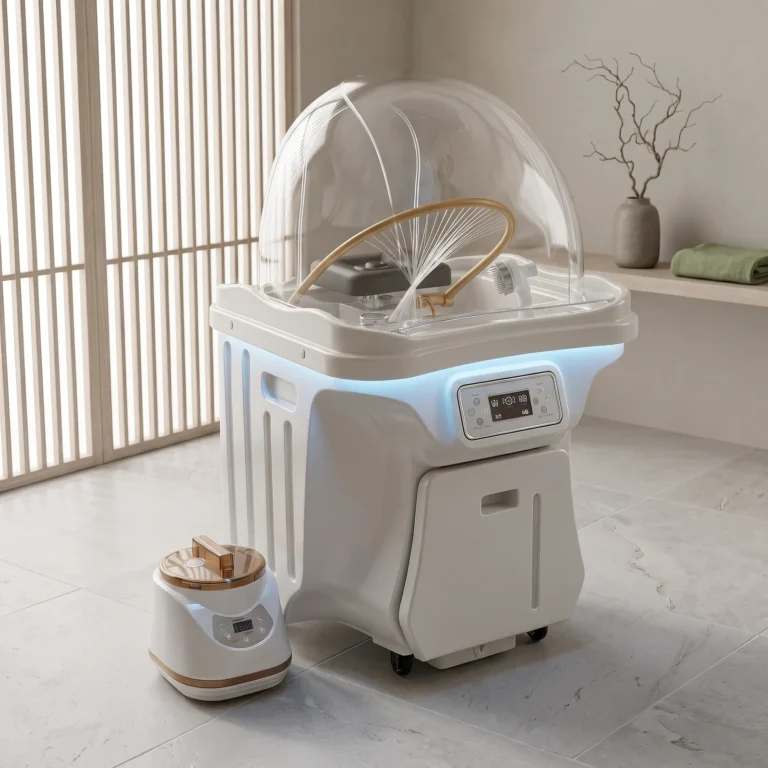
- The steam unit with hood and LED colour light therapy in the basin
- Delivery to your door with import duties included
- A 2-year warranty on normal use, with spare parts shipped from the factory
You arrange yourself:
- A practitioner stool (any height-adjustable salon stool)
- The plumber and the connection parts between your pipes and the unit
- Towels and a way to warm them
- Professional cleansing, mask and essential oil products
- Tea, a candle, a playlist and a quiet room
Full terms are on the delivery and warranty and returns pages.
Step 7: How do you market the first head spa bookings?
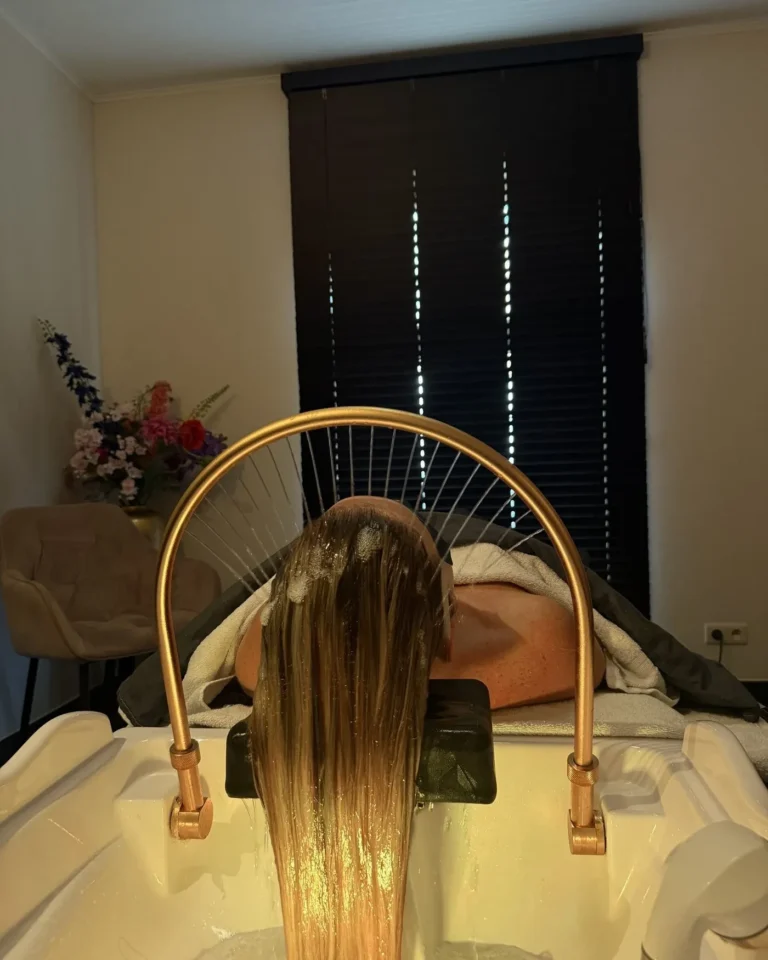
- Film the ritual. The water curtain from the arch, the steam hood lowering and the colour in the basin are the shots that get shared. A before and after of a clean scalp works on social media too, with the client’s permission.
- Name it. Give the ritual a name on your menu and your booking page so clients can book it by name, which is how they search for it.
- Decide on a launch offer yourself. Some owners open at full price and let the first clients’ posts do the work; others run an introduction for existing clients. Both work, and it is your decision.
- Rebook at the station. Ask for the next appointment in 4 to 6 weeks while the client is still relaxed. The first salon in an area becomes the place people are sent to; regulars are how you keep that position.
What are the common mistakes when starting a head spa business?
- Buying a unit that pumps and heats its own water. More parts in the water path means more to service and more to fail. Ask any seller whether the water is taken straight from the mains.
- Import duties not included. A price that looks lower can arrive with a duties invoice from the carrier. Ask whether duties are included in the delivery price; ours are.
- Wrong voltage or plug. Check that the unit covers your country’s voltage; ours run on 110 to 240 V with the correct plug included.
- No drain nearby. A room with water but no drain is not ready.
- A thin plastic basin. Ask for acrylic or ceramic.
- Ordering too late. With 8 to 10 weeks of lead time, an order placed six weeks before opening will not be there in time.
- No answers before payment. A seller who cannot answer technical questions before you pay will not answer them afterwards. Our FAQ covers the common ones.
Quick answers
How much does it cost to start a head spa business?
The station is the main cost: tables from $1,990 to $2,790 excl. VAT, beds from $2,790 to $5,790, chairs from $4,490 to $5,690, and the portable Nagisa basin at $2,290. Add a plumber, towels and products.
Do I need a plumber for a head spa?
We recommend one. The station connects to your cold and hot water supply and a drain and works at mains pressure; a handy person can do it, but a plumber is the safe choice.
How long does it take to get a head spa station?
Made to order and delivered in 8 to 10 weeks: about 7 days of production, 28 to 35 days of transport, plus margin. Order at least 12 weeks before an opening date.
How much can a head spa earn per month?
Our indicative example is $95 per ritual, 3 rituals a day, 5 days a week: about $6,170 a month in revenue before products and time.
Can I start a head spa without plumbing?
Yes, with the portable Nagisa basin ($2,290 excl. VAT). It runs from its own clean-water and waste-water tanks and rolls up to a bed or table you already own.